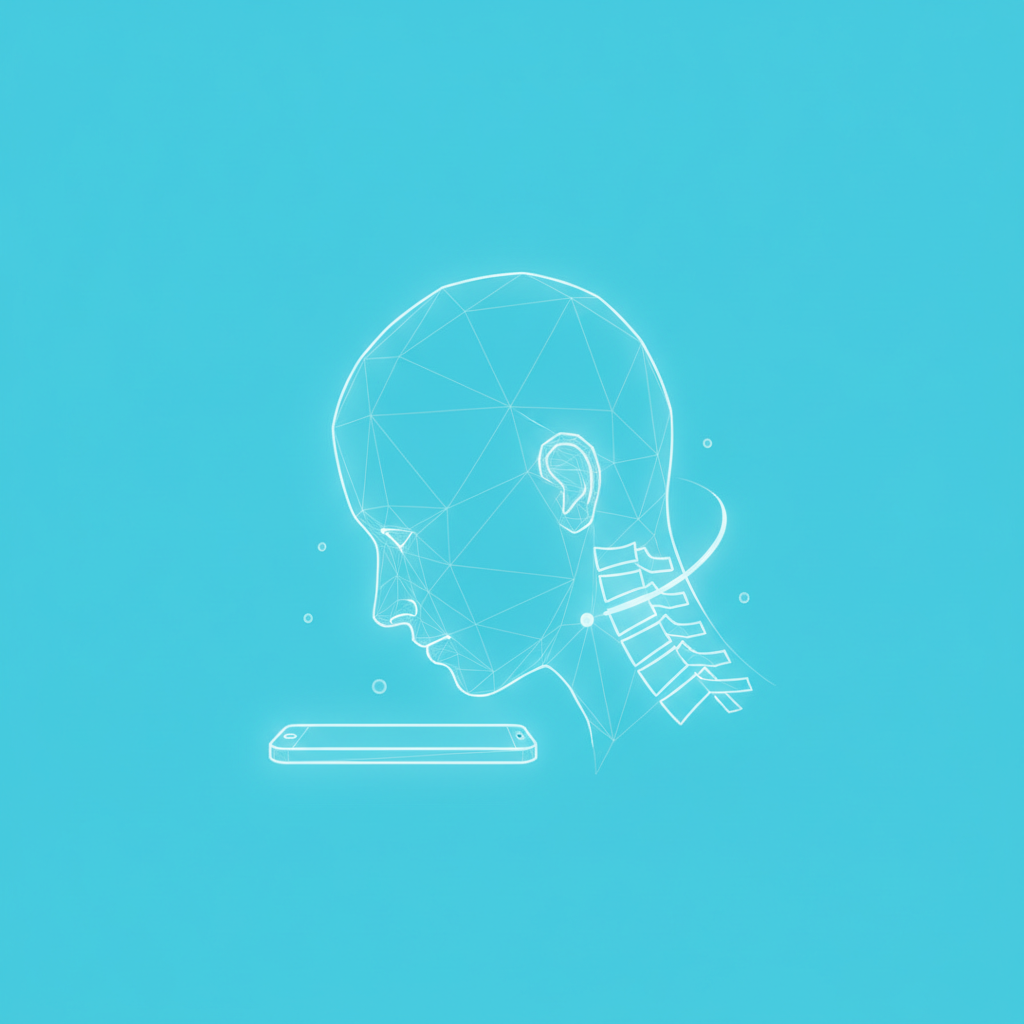
Tech neck refers to the neck pain, forward head posture, and muscle tension linked to hours spent looking down at phones and laptops, and in some cases it’s associated with early creasing or skin texture changes across the neck and upper chest.
It isn’t a formal medical diagnosis; it’s a descriptive, colloquial term clinicians and dermatologists use for a cluster of posture-related symptoms tied to modern screen habits.
A recent wave of before-and-after photos and dermatologist commentary on premature neck and chest skin changes, paired with physical therapists flagging posture strain from screen-down habits, has people wondering whether tech neck is worth worrying about or just a scare headline attached to an old problem. The posture mechanics are real and well documented; the skin story is more nuanced; both respond to fairly simple daily changes, covered below along with when it’s worth seeing a professional instead of troubleshooting at home.
What the research actually says about tech neck
The clearest, most replicated part of the tech neck story is biomechanical. As the head tilts forward and down, the load the cervical spine has to support increases sharply, since the further the head moves from a neutral, ears-over-shoulders position, the more leverage gravity has on it. A frequently cited spine-biomechanics analysis estimated that a head tilted forward around 60 degrees, roughly the angle many people use when texting, can place the equivalent of 50-60 pounds of force on the neck, compared to roughly 10-12 pounds in a neutral upright position. That’s the mechanical basis for the muscle fatigue, tension headaches, and upper-back tightness people associate with tech neck.
The skin and soft-tissue side is newer and less settled. Some dermatologists have observed that repeated forward flexion, similar to how repeated smiling or squinting is thought to contribute to fine lines over years, may be associated with earlier-appearing horizontal creasing across the neck. This is largely clinical observation rather than large controlled trials, so it’s reasonable to treat it as a plausible contributing factor rather than an established cause; sun exposure, natural aging, genetics, and sleep position are also well-established contributors to neck skin changes, which makes screen posture difficult to isolate as a standalone cause.
What’s better supported is the muscular side: sustained forward head posture is linked in physical therapy literature to overactive upper trapezius and levator scapulae muscles, underused deep neck flexors, and compensatory tightness through the chest and shoulders. Over months and years, this pattern is associated with reduced neck mobility and more frequent tension-type headaches in some people, though individual results vary based on activity level and existing spine health.
How to apply it: reducing tech neck day to day
Raise your screen instead of dropping your head
The single most effective change is bringing the device to eye level rather than tilting the head down to it. For laptops, a stand or a stack of books plus an external keyboard keeps the screen closer to eye height. For phones, holding the device up rather than resting it in your lap shifts the angle from a steep 45-60 degree tilt to something closer to neutral. Reducing total minutes spent in a steep forward tilt each day is what the biomechanics research points to as the meaningful variable.
Build in short, frequent posture resets
Set a recurring reminder every 30-45 minutes to do a brief reset: roll the shoulders back, gently tuck the chin (drawing it straight back rather than down), and hold for a few seconds. This chin-tuck targets the deep neck flexors that tend to be underused in forward-head posture, and physical therapists commonly recommend it as a low-effort daily habit.
Strengthen the upper back, not just the neck
Forward head posture rarely travels alone; it usually comes with rounded shoulders and a weak upper back. Rows, reverse flys, and scapular squeezes done a few times a week may help counteract hours spent hunched over a screen by giving the shoulder blades something stronger to retract against. A percussive massage tool can also help release chronically tight upper trapezius and levator scapulae muscles between strength sessions, where a lot of tech-neck tension concentrates.
Adjust sleep position and pillow support
Stomach sleeping tends to force prolonged neck rotation, and an overly high or flat pillow can keep the cervical spine out of neutral for hours at a stretch. A pillow that supports the natural curve of the neck without pushing the chin toward the chest is generally recommended by sleep and spine specialists as a simple way to reduce cumulative forward-flexion time across the day.
Common misconceptions about tech neck
“Tech neck is a recognized medical diagnosis.” It isn’t a formal diagnostic term. It’s colloquial shorthand for a cluster of posture-related symptoms (muscle strain, restricted mobility, tension headaches) and, in some discussions, associated skin changes. The underlying mechanics, cervical spine load and muscle imbalance, are well studied even though “tech neck” itself isn’t a clinical diagnosis.
“If my neck doesn’t hurt, I don’t have tech neck.” Pain is often a late symptom. Reduced neck rotation, tension headaches, and upper-back tightness frequently show up before sharp neck pain does, and people who don’t connect these symptoms to posture often skip the habit changes that would help most.
“A better chair fixes it on its own.” Ergonomic seating helps overall posture, but tech neck is driven specifically by device height and viewing angle. A great chair paired with a phone held low in the lap still produces the same forward-flexion pattern.
“Neck creasing from screen use is permanent and untreatable.” Existing creasing is unlikely to fully reverse on its own, but continuing to add hours of forward flexion each day is thought to make things worse over time, while reducing that habit and using targeted skincare may help manage the appearance going forward. It’s a “slow the trend” situation more than an all-or-nothing one.
When this is (and isn’t) something to manage on your own
Posture-driven tech neck symptoms, muscle tightness, mild tension headaches, stiffness that eases with movement, generally respond well to the setup and habit changes above over a few weeks of consistent effort. This is the profile most people who casually describe having “tech neck” actually fit.
It’s worth seeing a doctor or physical therapist rather than troubleshooting solo if you notice numbness or tingling in the arms or hands, sharp or shooting pain rather than dull tightness, grip weakness, worsening or unusual headaches, or symptoms that don’t improve after several weeks of consistent changes. Those signs can point to nerve involvement or a structural issue outside the scope of ergonomic fixes.
Tools and products that may help
Since a lot of tech-neck tension concentrates in the upper trapezius and levator scapulae, a percussive massage device is one of the more practical tools for working out that tightness between sessions. Our comparison of the Theragun vs. Hypervolt: Best Massage Gun 2026 breaks down which model fits different budgets and how each handles smaller muscle groups like the neck and shoulders.
On the skin side, most of the principles that apply to facial skincare, retinoids, peptides, broad-spectrum SPF, and gentle exfoliation, extend to the neck and chest, an area frequently left out of daily routines. Our Best Anti-Aging Skincare Products 2026 (Science-Backed) roundup covers evidence-based ingredients and formats worth considering.
Frequently asked questions
Is tech neck a real medical condition?
It’s not a formal clinical diagnosis, but the underlying issue, increased cervical spine load and muscle imbalance from sustained forward head posture, is well documented in spine biomechanics and physical therapy research. Most people describing “tech neck” are experiencing a real, measurable postural pattern, even though the name itself is informal.
Can tech neck cause permanent damage?
Muscle tightness and reduced mobility from posture are generally reversible with consistent habit changes. Skin-related changes are less clear-cut and harder to fully reverse, though reducing forward-flexion time is thought to help slow further changes. Persistent nerve-related symptoms should be evaluated by a doctor rather than assumed permanent.
How long does it take to notice improvement?
Many people notice reduced tension and improved mobility within two to four weeks of consistently applying screen-height adjustments, posture resets, and upper-back strengthening. Skin-related changes typically take longer, often several months of consistent care.
Does tech neck cause headaches?
Tension-type headaches are commonly associated with forward head posture and overactive upper trapezius muscles, which is why some people notice headache frequency easing as posture and stretching habits improve. Headaches have many causes, though, so persistent or unusual headaches still warrant a medical evaluation.
Will a standing desk or new pillow fix tech neck on its own?
Both can help reduce cumulative forward-flexion time, but neither addresses device height or viewing angle directly. A standing desk with a laptop still positioned low reproduces the same forward-tilt pattern as sitting. Screen height and viewing habits tend to matter more than the furniture itself.
Bottom line
Tech neck describes a real, well-documented postural pattern, forward head tilt that increases load on the cervical spine and overworks certain neck and shoulder muscles, plus a less-settled but plausible connection to earlier neck and chest skin changes. The posture side responds well to raising screen height, taking frequent short resets, and strengthening the upper back; the skin side benefits from reducing forward-flexion time and extending an existing skincare routine to the neck and chest. Most people can manage tech neck with a few weeks of consistent habit changes, and it’s worth a professional evaluation if numbness, sharp pain, or weakness show up alongside the usual tightness.