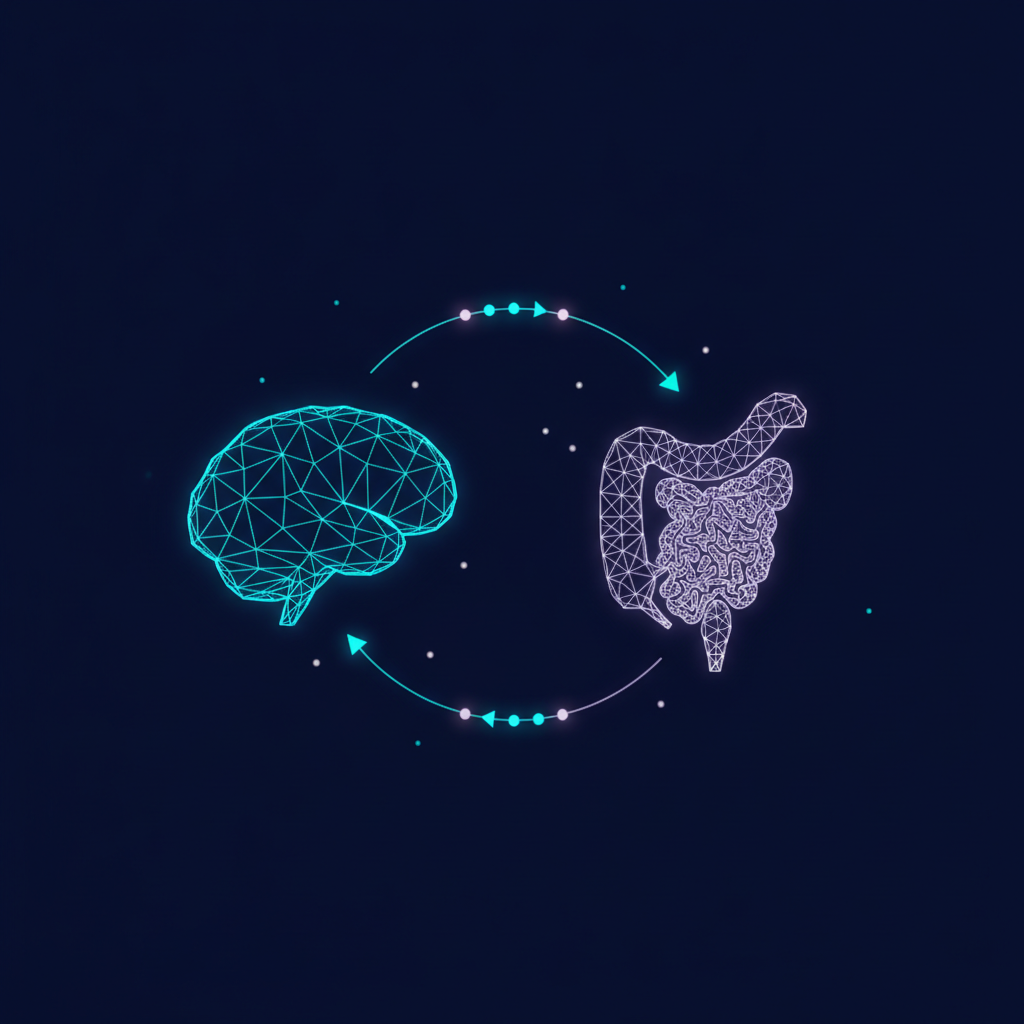
The gut-brain axis is the two-way communication network linking your digestive system and your brain, running through the nervous system, immune signaling, and a range of gut-produced chemicals that influence how you think, feel, and sleep.
It is one of the more counterintuitive ideas in modern health science: that the trillions of microorganisms living in your gut may have a meaningful influence on your mental state, your ability to concentrate, and the quality of your sleep. Research into the gut-brain connection has accelerated significantly over the past decade, and while much of it is still in early stages, the emerging picture is genuinely compelling. This explainer covers what the science actually shows, where it is strong, where it is still preliminary, and what practical steps may support this system in everyday life.
A note before diving in: this is an evolving area of research. Where the evidence is solid, we say so. Where findings are preliminary, small-scale, or contested, we say that too. On a topic this prone to overstatement, intellectual honesty is the most useful thing we can offer.
What the Gut-Brain Axis Actually Is
The gut-brain axis is not a metaphor. It refers to a network of actual physical and biochemical pathways connecting the gastrointestinal tract to the central nervous system. This communication runs in both directions: signals travel from the brain down to the gut, and from the gut up to the brain, continuously and simultaneously.
Three major channels carry this traffic:
- The vagus nerve — the longest cranial nerve in the body, running from the brainstem through the chest and into the abdomen. It is the primary physical conduit of the gut-brain axis, and research suggests that roughly 80–90% of vagal fibers carry signals from the gut to the brain rather than the other way around. This directionality is significant: the gut is largely talking to the brain, not just receiving its instructions.
- The enteric nervous system (ENS): sometimes called “the second brain,” the ENS is an extensive network of around 500 million neurons embedded in the lining of the gastrointestinal tract. It can function independently of the central nervous system, regulating digestion without waiting for brain signals, which is part of why gut sensations can be so immediate and visceral.
- Microbiome-produced signaling molecules: the gut microbiome (the community of bacteria, fungi, and other microorganisms living primarily in the large intestine) produces neurotransmitters and precursor molecules that enter the bloodstream and may influence brain function. Key examples include serotonin, GABA (gamma-aminobutyric acid), and dopamine precursors, though the mechanisms by which gut-produced versions of these reach the brain are still being studied.
Research published in journals including Nature Reviews Neuroscience and Cell Host & Microbe has mapped many of these pathways in animal models, with growing (though still developing) translation to human studies. The existence and basic architecture of the gut-brain axis is well established. What remains less certain is precisely how much influence each pathway exerts, in whom, and under what conditions.
How the Microbiome Affects Mood, Focus, and Sleep
Mood and Anxiety: The Serotonin Question
One of the most cited statistics in gut-brain research is that approximately 90–95% of the body’s serotonin is produced in the gut. This figure is accurate, but it requires careful interpretation. Peripheral serotonin (produced in the gut) does not cross the blood-brain barrier in meaningful quantities, so gut-derived serotonin does not directly act as the mood-regulating neurotransmitter that most people associate with antidepressants.
What gut-produced serotonin does do is regulate intestinal movement (motility) and act locally within the enteric nervous system. It may also influence vagal signaling, which in turn may affect mood via the gut-brain axis, but this pathway is still being characterized in human research. The relationship between gut serotonin and mood is real but indirect, and considerably more nuanced than the “gut makes serotonin, serotonin affects mood” simplification that circulates widely.
Specific strains of gut bacteria may influence levels of GABA, a calming neurotransmitter, and microbiome composition is associated with anxiety-like behaviors in animal models. A number of small human trials have explored “psychobiotics” (probiotic strains selected for potential mood effects), with some showing modest reductions in anxiety or depression scores. However, most of these studies are small, short-term, and use varying measures. A 2021 meta-analysis in JAMA Psychiatry found that evidence for probiotics as a depression treatment was insufficient to draw clinical conclusions. This is an area where hope is warranted, but claims should remain hedged.
What this means practically: gut health likely plays some role in mood regulation through multiple indirect pathways, but it is not a substitute for evidence-based mental health treatment. If you are experiencing persistent low mood or anxiety, please consult a healthcare professional.
Focus and Cognitive Function: Psychobiotics Research
The term “psychobiotics” refers to live organisms that may produce mental health benefits through gut-brain signaling. Research is genuinely emerging here. A 2019 study in Psychopharmacology found a 4-week prebiotic intervention was associated with reduced stress responses in healthy volunteers. A 2021 trial found a multi-strain probiotic was associated with modest improvements in memory in older adults. Both findings are preliminary: the trials were small, short, and not yet replicated. Animal studies in germ-free mice are mechanistically stronger, but translating rodent cognitive outcomes to humans has a poor track record across neuroscience broadly.
The honest summary: the gut-brain connection may influence cognitive function through inflammation, short-chain fatty acid production, and neurotransmitter precursor availability. The research is interesting, not yet actionable.
Sleep Quality: The Circadian-Microbiome Connection
Sleep and gut health appear to be genuinely bidirectional: disrupted sleep is associated with shifts in microbiome composition, and some microbiome-derived signals may influence circadian rhythm regulation.
A 2019 study in Gut found that short sleep duration was associated with lower microbial diversity in a large UK cohort. Research in animal models has shown that germ-free mice (those with no gut microbiome) have disrupted circadian rhythms, and that microbiome composition in normal mice fluctuates across the 24-hour cycle in ways that appear to influence host circadian gene expression.
The microbiome produces short-chain fatty acids (SCFAs) through fermentation of dietary fiber. Butyrate, one of the key SCFAs, is associated with promoting slow-wave (deep) sleep in animal models and is being explored in early human research. Some gut bacteria also produce tryptophan, a precursor to both serotonin and melatonin, though how much this influences sleep in humans remains under study.
The practical reality: supporting your microbiome through diet and sleep hygiene are likely mutually reinforcing. Sleep deprivation may harm your microbiome, and a healthier microbiome may support better sleep. The loop is real; the precise levers are still being identified.
What the Research Shows (and What It Doesn’t)
The gut-brain axis is one of the most active research frontiers in biomedicine, which makes it fertile ground for both genuine discovery and premature claims. A clear-eyed reading of the evidence reveals some genuinely strong ground and some significantly softer territory.
Where the evidence is reasonably strong:
- The basic architecture of the gut-brain axis (vagus nerve, ENS, microbiome signaling) is well established in human physiology.
- Microbiome diversity is consistently associated with markers of metabolic and immune health in large observational studies.
- Disrupted sleep is associated with microbiome changes, and vice versa, across multiple human cohorts.
- Specific probiotic strains have clinical evidence for narrow applications: antibiotic-associated diarrhea prevention (Lactobacillus rhamnosus GG, Saccharomyces boulardii) and some IBS symptom management (Lactobacillus plantarum 299v).
Where the evidence is preliminary:
- Most human trials on psychobiotics and cognitive function are small (under 100 participants), short (4–12 weeks), and not replicated.
- Animal models account for a large share of the mechanistic evidence; human translation is uncertain.
- The specific microbiome composition that might be “optimal” for mental health or cognitive function has not been identified, and likely varies by individual.
- Most commercially sold probiotic supplements have not been tested for the mood, focus, or sleep outcomes they implicitly or explicitly market toward.
Researchers in this field often note that causality is genuinely difficult to establish. People with depression, for example, tend to have different microbiome profiles than those without, but whether microbiome differences contribute to depression, result from it, or are both caused by a third factor (diet quality, exercise, sleep) remains an open question in most cases.
Practical Steps to Support the Gut-Brain Connection
Prioritise Dietary Diversity
The gut microbiome is primarily shaped by what you eat, and diversity of plant-based foods appears to be one of the strongest levers available. Large observational studies, including the British Gut Project, associate eating 30 or more different plant foods per week with significantly greater microbial diversity. This doesn’t require radical dietary overhaul: rotating your vegetables, legumes, grains, nuts, and seeds rather than defaulting to the same handful of ingredients is the underlying principle.
Fermented foods (yogurt with live cultures, kefir, kimchi, sauerkraut, miso, tempeh) are associated with increased microbiome diversity in some trials, including a notable 2021 randomised controlled trial from Stanford (Cell, Wastyk et al.) that found a high-fermented-food diet increased microbial diversity and reduced inflammatory markers in healthy adults. These benefits may compound when fermented foods are consumed alongside a high-fiber diet.
For people exploring ways to increase plant food variety and micronutrient coverage, a quality greens powder can be a practical complement. Our best greens powders for 2026 guide covers formulations that lead on ingredient transparency and dose clarity.
Protect Your Sleep
Given the bidirectional relationship between sleep and microbiome health, consistently poor sleep is likely working against your gut-brain axis from both directions. Sleep hygiene fundamentals (consistent wake time, limiting bright light in the evening, a cool and dark sleep environment) are the evidence-based foundation. If you’re exploring wearable tools to understand your sleep patterns better, our comparison of the best sleep trackers for 2026 covers the leading options.
For sleep specifically, magnesium glycinate has reasonable supporting evidence as a sleep aid that is also gut-friendly; our guide to magnesium glycinate for sleep covers dosing and timing in detail.
Manage Stress Actively
Chronic psychological stress affects gut motility, gut barrier function, and microbiome composition through the gut-brain axis. This creates a potential feedback loop: stress alters the gut environment, which may in turn influence mood signaling back to the brain. Stress management, whether through breathwork, regular movement, structured relaxation, or mindfulness practice, may interrupt this loop at multiple points.
Regular meditation is among the better-studied stress interventions, and reducing chronic stress is one plausible mechanism by which mindfulness practices may support gut health indirectly. If you’re evaluating meditation apps to build a consistent practice, we’ve reviewed the field in our Headspace vs Calm vs Insight Timer comparison.
Move Regularly
Physical activity is consistently associated with higher microbiome diversity in observational research, independent of diet. The mechanisms are not fully established, but regular moderate exercise (30 minutes of brisk walking most days, for example) appears to be associated with favorable gut composition compared to sedentary patterns. Exercise also directly supports vagal tone, which is the primary physical channel of the gut-brain axis.
Common Misconceptions About the Gut-Brain Axis
1. “90% of serotonin is made in the gut, so gut health directly controls mood”
The statistic is accurate; the conclusion is not. Gut-derived serotonin regulates intestinal movement and local gut function. It does not cross the blood-brain barrier to directly influence mood. The relationship between gut serotonin and mood exists but is indirect, operating through vagal signaling and other pathways that are still being characterized. Mood is regulated by brain-derived serotonin; gut-derived serotonin plays a different role.
2. Taking any probiotic improves gut-brain health
Probiotics are strain-specific. The clinical evidence for one strain does not transfer to another, even within the same species. Most commercially available probiotic supplements have not been tested for mood, cognitive, or sleep outcomes. A product marketed as a “brain probiotic” almost certainly has weaker evidence for that claim than its labeling implies. Look for products that cite specific strain designations (such as Lactobacillus rhamnosus GG) and peer-reviewed research behind them.
3. The gut-brain axis can replace conventional mental health treatment
Supporting gut health is a reasonable complementary lifestyle strategy. It is not a substitute for evidence-based mental health treatment. Depression, anxiety disorders, and other mental health conditions require appropriate professional evaluation. Framing microbiome interventions as an alternative to therapy or medication is a misrepresentation of what the current evidence supports.
4. A “leaky gut” is the cause of most brain fog and mood problems
Intestinal permeability is a real physiological phenomenon under active research. However, “leaky gut syndrome” as a blanket explanation for brain fog, low mood, or fatigue is not a recognised medical diagnosis. Some research does associate increased intestinal permeability with inflammatory conditions that may affect brain function, but this is a far cry from a causal explanation for common symptoms. Persistent cognitive or mood symptoms warrant evaluation by a healthcare professional, not self-diagnosis from wellness content.
5. Fermented foods and probiotic supplements are equivalent
They are related but not interchangeable. Fermented foods deliver live microorganisms alongside fiber, vitamins, and other bioactive compounds that may work synergistically. The Stanford fermented food trial specifically used whole foods, not supplements. Probiotic supplements deliver specific strains at controlled doses and have clinical evidence in specific contexts. Neither is categorically superior; they serve different purposes.
Tools and Approaches Worth Exploring
The practical core of gut-brain support is lifestyle: dietary diversity, consistent sleep, stress management, and regular movement. That said, a few tool categories may be worth exploring for people who want structured support:
Meditation and mindfulness apps offer a structured way to build a stress-management practice, which may support the gut-brain axis by reducing chronic stress signaling. We’ve reviewed the three leading platforms in our Headspace vs Calm vs Insight Timer comparison, covering features, approach, and who each suits best.
Greens powders can help people increase plant food variety and daily micronutrient coverage, both of which support microbiome diversity. Some formulations also include prebiotic fibers. Our best greens powders guide for 2026 evaluates the field on ingredient quality and label transparency.
Nootropic supplements are increasingly being marketed with gut-brain language, and some formulations do include ingredients with emerging evidence for cognitive support (lion’s mane mushroom, phosphatidylserine, bacopa monnieri). The evidence base varies considerably by ingredient. Our best nootropics for focus in 2026 guide examines what the research actually supports and what to look for when evaluating these products.
Frequently Asked Questions
What exactly is the gut-brain axis?
The gut-brain axis is the bidirectional communication network connecting the gastrointestinal tract and the central nervous system. It operates through three primary pathways: the vagus nerve (a long nerve running from the brainstem to the abdomen), the enteric nervous system (a large network of neurons embedded in the gut wall), and biochemical signaling from the gut microbiome to the bloodstream and brain. Both the gut and the brain continuously send and receive signals through these channels.
Can gut health really affect my mood?
There is plausible biological reason to think gut health influences mood through indirect pathways, including vagal signaling, inflammatory markers, and microbiome-produced compounds. The evidence in animals is solid; human trials are smaller and more mixed. Gut health is one factor among many that influence mood, alongside genetics, sleep, exercise, social connection, and psychological history. It is not a primary driver of mood in the way that brain neurochemistry is, and it is not a substitute for professional mental health support.
How long does it take to improve the gut-brain axis?
Microbiome composition can begin shifting in response to dietary changes within days to weeks, though more stable changes in community composition appear to require months of consistent dietary habits. Whether microbiome-driven changes in mood, focus, or sleep follow similar timelines is not yet well established. Lifestyle habits that support gut health (dietary diversity, sleep, stress management, exercise) have benefits across many body systems and are worth building regardless of gut-brain-specific outcomes.
Do I need to take probiotics to support my gut-brain axis?
Not necessarily. Most people can meaningfully support their gut microbiome through diet before reaching for a supplement. Whole food sources of beneficial bacteria (yogurt, kefir, kimchi, sauerkraut, miso) and prebiotics (garlic, onion, leeks, oats, bananas) are the evidence-based starting point. If you’re considering a probiotic supplement for mood or cognitive purposes specifically, the evidence base is preliminary and strain selection matters. Discuss options with a healthcare provider, particularly if you have any underlying health conditions.
What foods are best for the gut-brain connection?
The foods with the strongest evidence for supporting microbiome diversity are diverse plant foods (vegetables, legumes, whole grains, fruits, nuts, seeds), fermented foods with live cultures (yogurt, kefir, kimchi, sauerkraut, miso), and adequate fiber intake overall. Omega-3 fatty acids (found in oily fish, walnuts, and flaxseed) are associated with reduced neuroinflammation, which may support the brain side of the equation. Consistent dietary patterns matter more than any individual ingredient.
Bottom Line
The gut-brain axis is real, well-documented in its basic architecture, and genuinely fascinating. The emerging evidence that your gut microbiome may influence mood, cognitive function, and sleep through multiple biological pathways represents one of the more interesting developments in health science over the past decade. At the same time, the gap between what research shows and what is often claimed in wellness marketing is significant, and intellectual honesty demands acknowledging it. Most human trials are small and preliminary. Causality is difficult to establish. No supplement has been proven to improve mood or cognitive function by targeting the gut-brain axis in ways that would satisfy clinical standards.
What does hold up: supporting your gut microbiome through dietary diversity, fermented foods, quality sleep, stress management, and regular movement is good for your broader health, and the gut-brain connection gives you additional biological reasons to take these habits seriously. Start with the fundamentals. Be appropriately skeptical of products that promise specific brain or mood outcomes through gut targeting. And if you have persistent concerns about mood, cognitive function, or sleep, consult a healthcare professional rather than looking for answers in the supplement aisle.